
Understanding Mortgage Rates and the True Cost of Capital
At its core, a mortgage rate is the price you pay to borrow money for real estate, expressed as an annual percentage of the loan amount. While everyday consumers view mortgage rates simply as a monthly payment multiplier, contractors, developers, and project owners must view them as the fundamental cost of capital. Whether you are financing a ground-up commercial development, funding a speculative residential build, or taking out a home equity loan for a major remodel, the interest rate dictates your project’s financial feasibility. When the cost of borrowing rises, the margin between your total project costs and your final return shrinks, making precise budgeting more critical than ever.
For a project owner or general contractor, understanding the baseline mortgage rate environment is the first step in creating a realistic financial model. A shift of just 100 basis points—one percentage point—can add tens of thousands of dollars to the total cost of a multi-million dollar development over the life of the loan. This is why professional estimators and developers do not just look at the physical costs of lumber, labor, and concrete; they rigorously model the financing costs. By treating the mortgage rate as a dynamic line item in your overall project budget, you protect your profit margins against market volatility and ensure your bid-ready numbers reflect reality.
Key Cost Drivers That Influence Today’s Mortgage Rates
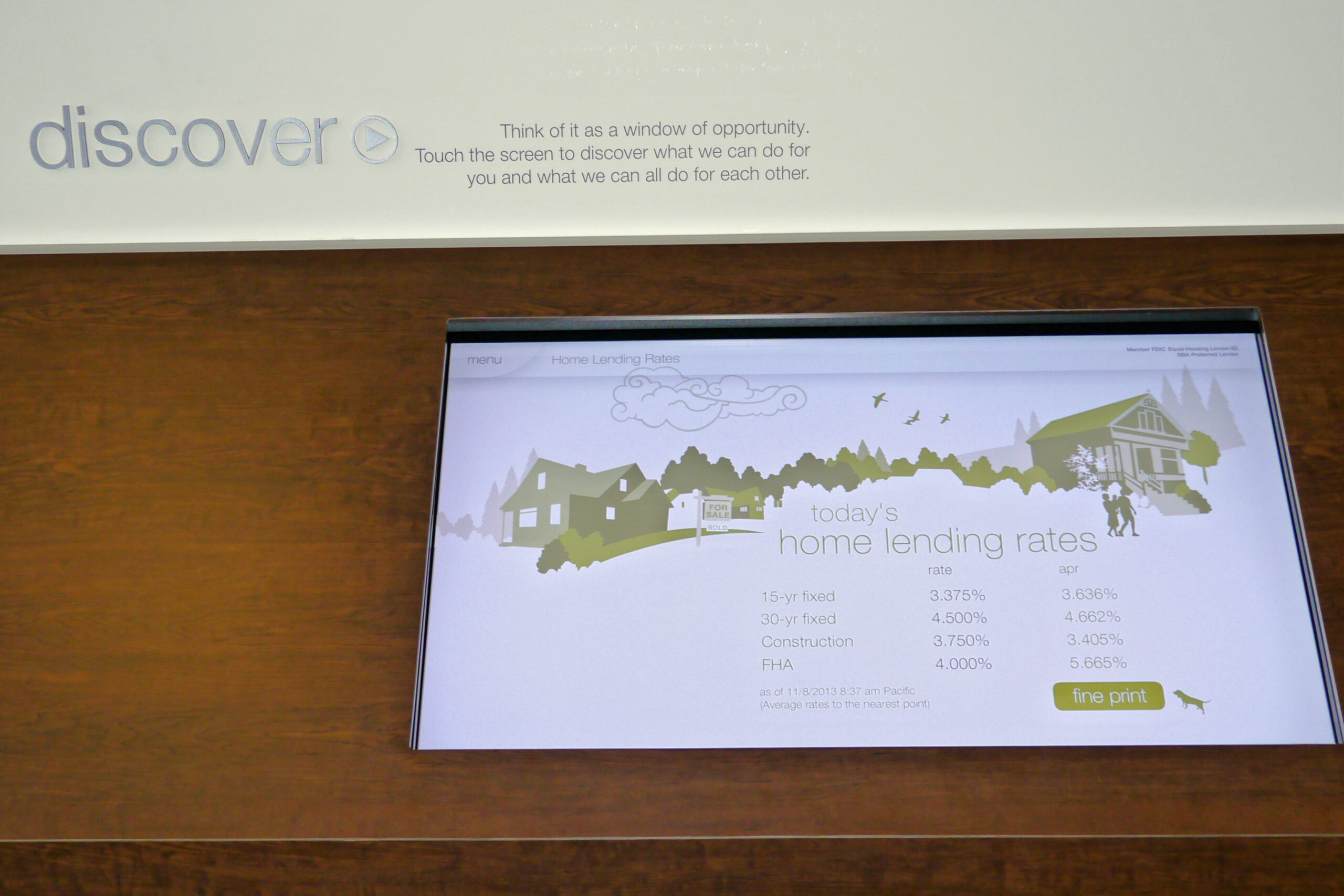
Mortgage rates do not move in a vacuum; they are heavily influenced by macroeconomic indicators, Federal Reserve policy, and the broader bond market. The most direct benchmark for fixed mortgage rates is the yield on the 10-year U.S. Treasury note. When investors anticipate economic growth or rising inflation, they demand higher yields on Treasury bonds, which in turn pushes mortgage rates up. Conversely, during economic downturns or periods of market uncertainty, capital flows into the safety of government bonds, driving yields and mortgage rates down. Understanding this relationship helps developers and investors anticipate rate movements before they officially lock in their construction or permanent financing.
Beyond macroeconomic trends, your specific loan parameters and financial profile play a massive role in the exact rate you are offered. Lenders adjust their base rates using risk-based pricing, meaning your credit score, loan-to-value (LTV) ratio, and the property type directly impact your final number. For instance, a borrower with a credit score above 760 securing an 80% LTV on a single-family primary residence will receive a significantly lower rate than an investor with a 680 score putting only 10% down on a speculative flip. Furthermore, the type of loan matters; construction loans and bridge financing typically carry higher variable rates and additional origination points compared to traditional 30-year fixed residential mortgages.
To put the financial impact into perspective, consider a $2,000,000 construction loan. At a 6% interest rate, the annual interest cost is $120,000. If market conditions push that rate to 7.5% before you lock, your annual interest cost jumps to $150,000—a $30,000 annual increase that directly eats into your project’s profit margin. This is why tracking these cost drivers and securing rate locks at the optimal time is just as important as negotiating a tight subcontractor bid.
How Interest Rate Fluctuations Alter Your Construction ROI
For real estate developers and flippers, interest rate fluctuations have a compounding effect on the overall return on investment (ROI). When mortgage rates rise, the pool of qualified end-buyers shrinks because their monthly purchasing power decreases. This reduction in buyer demand can force you to lower your final sale price, compressing your profit margin from both sides: your financing costs are higher, and your revenue is lower. Savvy developers account for this by stress-testing their pro formas. A robust financial model will calculate the project’s internal rate of return (IRR) at multiple interest rate scenarios—such as 5%, 6.5%, and 8%—to ensure the deal remains profitable even if rates spike during the build phase.
Carry costs are another area where rate fluctuations severely impact project budgets. During the construction phase, you are typically paying interest on a draw schedule, meaning you only pay interest on the funds actually disbursed to the builder. However, if rates are variable and jump unexpectedly, your monthly interest reserve requirements will increase. If your initial budget did not include a sufficient contingency for these higher carry costs, you may find yourself injecting additional personal capital to keep the project funded. Accurate upfront estimating that includes a padded interest reserve is the only way to prevent these rate-driven surprises from stalling your build.
Common Financing Mistakes That Inflate Project Budgets
One of the most common mistakes project owners make is failing to lock their interest rate early enough in the pre-construction phase. Many owners assume they can wait until the blueprints are finished and the permits are pulled to secure financing, only to find that rates have jumped by a full percentage point in the interim. This delay can add tens of thousands of dollars to the total budget. The fix is to engage with lenders during the initial feasibility stage, secure a rate lock with adequate float time, and factor the cost of that lock (such as extension fees or points) directly into your preliminary budget.
Another frequent error is underestimating the true cost of the loan by ignoring points, origination fees, and appraisal costs. A mortgage rate of 6.5% might look attractive on the surface, but if the lender is charging two discount points to buy that rate down, the upfront capital requirement increases significantly. Project owners often focus solely on the monthly payment or the interest rate percentage, forgetting that points are prepaid interest that require cash at closing. Always calculate the Annual Percentage Rate (APR) rather than just the note rate, as the APR factors in these upfront costs and gives you a true picture of the loan’s total expense.
Finally, many homeowners and small-scale flippers fail to separate their construction loan budget from their permanent mortgage budget. They secure a construction-to-permanent loan but fail to model what happens if the permanent mortgage rate is higher than expected at the time of conversion. If rates rise during the 12-month build phase, the final mortgage rate could be substantially higher than the initial teaser rate, drastically altering the long-term cash flow. The solution is to model the worst-case scenario for the permanent conversion rate and ensure your long-term holding costs are still sustainable.
How to Calculate a Bid-Ready Budget Including Financing Costs
Creating a truly bid-ready budget requires merging your physical construction estimates with your financial and financing models. The process must start with a highly accurate material and labor takeoff. You cannot accurately model your loan amount or interest reserve if you do not know exactly what the building will cost to construct. This is where professional estimating becomes invaluable; by turning your blueprints into a precise, line-item budget, you eliminate the guesswork and ensure your loan request is based on hard data rather than rough square-footage averages.
Once the hard construction costs are established, you must layer in the soft costs, which include architectural fees, permits, inspections, and crucially, your financing costs. Calculate your total loan amount by subtracting your available equity or down payment from the total project cost (hard costs plus soft costs). Next, work with your lender to determine the exact interest rate, points, and draw schedule. Using these numbers, calculate your total interest reserve—the total amount of interest you will pay over the expected construction timeline.
Add this interest reserve to your total project budget to determine your true all-in cost. This final number is what you should use to evaluate the project’s feasibility, calculate your expected ROI, and determine your maximum allowable offer price for the land or property. By integrating precise construction takeoffs with rigorous financial modeling, you create a comprehensive, bid-ready budget that protects your margins and keeps your project fully funded from the first dirt move to the final certificate of occupancy.
Conclusion
Mortgage rates are a powerful force that can make or break a real estate project, but they do not have to be an unpredictable variable. By understanding the macroeconomic drivers, avoiding common financing pitfalls, and rigorously modeling your interest reserves, you can protect your profit margins in any rate environment. The foundation of this financial security is an accurate, detailed construction estimate. You cannot manage what you do not measure, and that applies to both the cost of capital and the cost of construction.
If you are ready to move forward with your next development or remodeling project, start with a solid foundation. Design To Estimate specializes in turning complex blueprints into clear, bid-ready budgets for contractors, developers, and project owners. Contact us today to request a professional estimate and ensure your physical build costs are as precise as your financial models.
Frequently Asked Questions
What’s today’s mortgage interest rate?
Mortgage interest rates fluctuate daily based on broader economic indicators, inflation data, and the 10-year Treasury yield. Because rates change constantly throughout the trading day, it is best to check live lender feeds or consult directly with a mortgage broker for the exact rate applicable to your specific credit profile and loan type on any given day.
What are the current 30-year mortgage rates?
Current 30-year fixed mortgage rates generally track the 10-year U.S. Treasury yield and typically sit higher than 15-year fixed options due to the extended risk to the lender. While the exact daily rate varies based on market conditions and borrower qualifications, 30-year rates have recently hovered in the mid-to-high single digits, making precise budgeting essential for long-term affordability.
Can you get a 4% mortgage rate?
Securing a 4% mortgage rate in the current economic environment is highly unlikely without significant financial concessions. To achieve a rate that low today, a borrower would typically need the seller to pay for a permanent interest rate buydown, utilize specific subsidized government programs, or purchase discount points upfront to artificially lower the note rate.
Will mortgage rates drop to 3% again?
A return to 3% mortgage rates is highly improbable in the near future unless the economy experiences a severe recession that prompts the Federal Reserve to slash the federal funds rate back to near-zero levels. The 3% rates seen in the early 2020s were an anomaly driven by unprecedented monetary stimulus, and most economic forecasts suggest rates will stabilize at a higher historical baseline.
How do mortgage rates affect my construction loan budget?
Construction loans typically feature variable interest rates and require an interest reserve to cover payments during the build phase. If mortgage rates rise during construction, your monthly interest costs increase, which can deplete your interest reserve faster than anticipated and require you to inject additional cash to keep the project funded.